
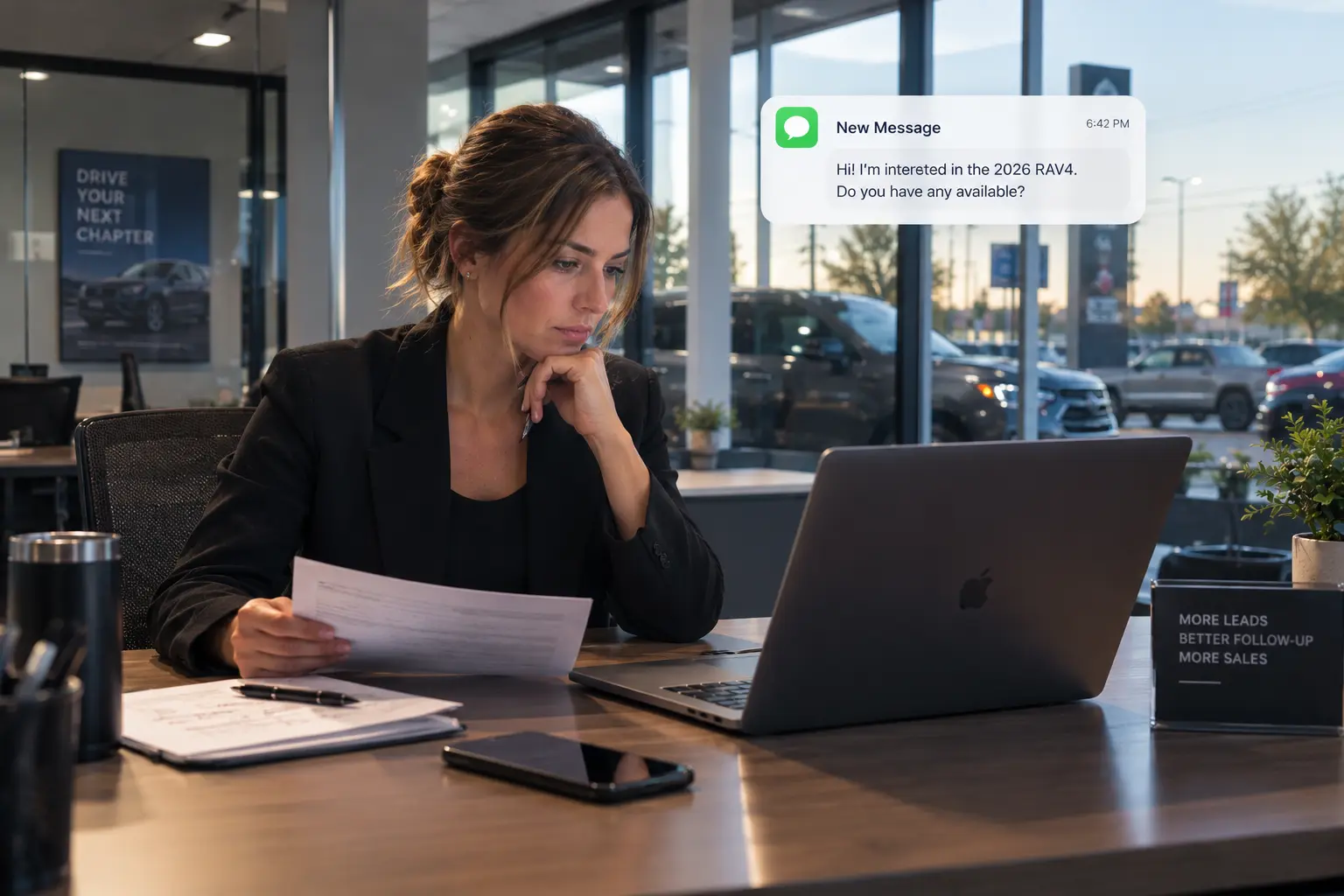
You pay for every lead that comes through your door, your website and your phones. Some you pay for in ad dollars, some in marketplace subscriptions, some in the years it took to build your reputation. And yet most stores lose a big share of those leads before anyone has a real conversation with the shopper.
The numbers are hard to ignore. Foureyes looked at more than 22,900 dealer websites and found that 42.7% of qualified leads were mishandled in 2025. Nearly 63% of shoppers who came back to a dealer’s site got no follow-up from a salesperson within a day. On the phone side, Car Wars found that only 56% of sales callers reached a person in the first half of 2026.
None of this is about working harder. It’s about a few habits done every day, by everyone, without exceptions. This guide walks through each one, with schedules, scripts and examples you can use on Monday.
What separates stores that sell their leads from stores that waste them
Strip away the software pitches and the research points to five habits:
1. They answer in minutes, day or night, and actually answer the question. A fast reply that says “When can you come in?” isn’t an answer. In Pied Piper’s 2026 study, dealer texts answered the shopper’s actual question only about half the time.
2. They go all-in on the first three days. Foureyes found that 12.4% of leads buy in days 1 to 3, but only 2.3% in days 4 to 7. The window closes fast.
3. They keep following up for 90 days, with something new to say every time, instead of giving up after two calls.
4. They treat the phone like gold. Phone shoppers buy about three and a half times as often as web-form shoppers, yet nearly half of sales calls never reach a person.
5. They let AI handle speed and volume, and people handle trust. According to Cox Automotive, 82% of dealers now use AI, and 22% of them say it has grown their sales.
What dealership lead management really means
Dealership lead management is simply how your store turns “I’m interested” into a sold car. Every inquiry gets logged, gets one owner, gets a fast and helpful answer, gets followed up on a schedule, and ends either in a sale or in a longer-term relationship. Nothing should sit in limbo.
What makes it harder in 2026 is that shoppers show up to the conversation much further along. Cox Automotive’s latest Car Buyer Journey study found buyers spend about 14 hours on the whole purchase, and roughly 7 of those hours researching online before they talk to anyone. By the time someone fills out your form, they’ve usually picked the car. They want to know three things: is it still there, what will it really cost, and are you easy to deal with.
Here’s the whole journey on one page. Every lead moves forward to a sale or drops into a nurture track; none should just stop.
Every lead should end in a sale or a stay-in-touch plan
A lead’s journey, from first contact to repeat customer
Capture
every lead, one place
Assign an owner
one person, one record
First response
under 5 min, useful
Talk and learn
needs, timing, trade
Appointment set
time, car and greeter
Shows up
confirmed twice
Sold
delivered, reviewed
Swipe to see the full diagram →
Not every lead is worth the same: where to spend your time first
A walk-in, a phone call and a web form are three very different shoppers. Foureyes tracked more than 8 million sales opportunities and found walk-ins bought 41% of the time, phone callers about 25% of the time, and web-form shoppers about 7% of the time. That doesn’t mean web leads aren’t worth chasing. It means each type needs a different first move.
| Lead type | What the shopper usually wants first | Your best first move |
|---|---|---|
| Phone call | A real person, right now | Answer live within three rings. If you miss it, call and text back within five minutes |
| Walk-in | A test drive and a straight number | Greet them fast, get their details into your CRM before they leave, follow up the same day |
| Your website | Proof the exact car is on the lot, plus a price or payment | Confirm the car, answer the question they asked, send a photo or quick video |
| Chat or text | A quick answer without a phone call | Reply in the same channel within two minutes. Only switch to a call if they’re happy to |
| Marketplaces (Cars.com, Autotrader, CarGurus, TrueCar, Facebook Marketplace) | To compare you with three other stores | Be the most transparent store: clear price, history, and why your car is the better one |
| Trade-in and credit apps | A number: what’s my car worth, will I get approved | Give an honest range and explain what it takes to firm it up |
| Service customers and past buyers | A good reason to upgrade, without pressure | A personal note from someone they know, with a specific offer |
| Old leads that went quiet | Nothing yet; their timing changed | Reach out only when something changes: a price drop, a new arrival, a new incentive |
One more thing worth saying out loud: when the same shopper contacts you twice, that’s not a duplicate to delete. Someone who fills out your website form and also inquires on a marketplace is more serious, not less. Keep one record, one salesperson, and treat the second inquiry as a reason to call now.
How fast is fast enough?
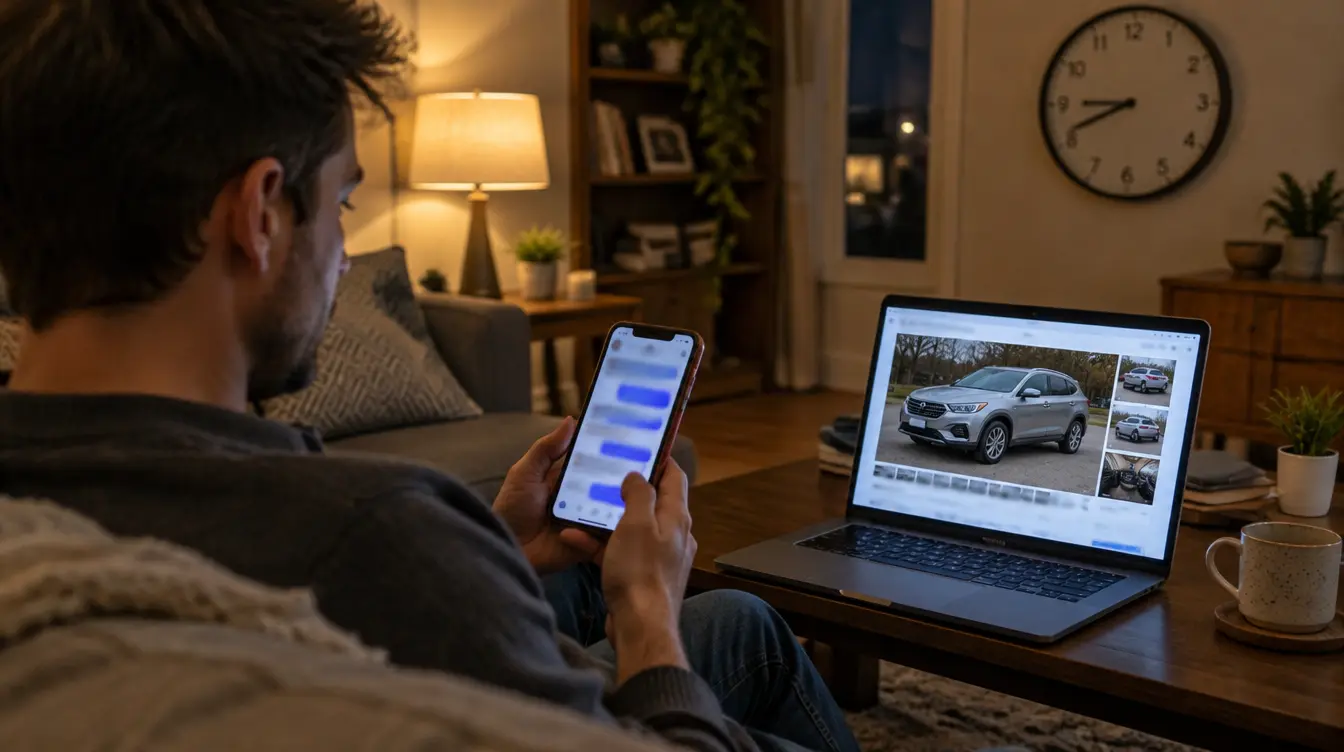
Aim to reply within five minutes, any hour of the day, in the same way the shopper reached you. Then make sure a real person picks up the conversation within about 15 minutes during business hours.
What the research really says
You’ve probably heard that answering in five minutes makes you “100 times more likely” to reach a lead. That figure comes from a 2007 study of business-to-business sales calls, not car buyers, so take it with a grain of salt. The better evidence points the same way, though:
- A Harvard Business Review study of more than 2,000 companies found that businesses that contacted a lead within an hour were nearly seven times as likely to have a meaningful conversation as those that waited longer.
- Foureyes found most car sales from a lead happen in the first three days.
- Dealers have gotten much faster. In a 2025 mystery shop of about 1,700 US dealerships, DAS Technology found 61% replied within 15 minutes.
Here’s the catch: in that same study, 74% of replies didn’t include a price and 91% didn’t mention a payment. Stores got faster, but not more helpful. Nobody has proven that a two-minute reply sells more cars than a ten-minute one. What clearly loses deals is a slow reply, or a fast one that says nothing.
Response targets for every channel
| How the shopper reached you | First reply | First real person | Raise a flag if |
|---|---|---|---|
| Phone call | Answered live by the third ring | Right away | A missed call isn’t returned within 5 minutes |
| Text or chat | Under 2 minutes | Under 5 minutes during business hours | The shopper’s reply sits unanswered for 5 minutes |
| Website or marketplace lead | Under 5 minutes, by text and email | A phone call within 15 minutes during business hours | No real two-way conversation after an hour |
| Lead that arrives after closing | Under 5 minutes, automated or AI | First 30 minutes after you open | Nobody has touched it by 10 a.m. |
Don’t forget the second reply. When the shopper writes back “What’s the out-the-door price?”, how fast you answer that matters just as much as the first message. A shopper left waiting an hour on a direct question is talking to another store.
A fast reply that says nothing still loses the deal
Here’s the kind of reply most shoppers get, sent within 30 seconds:
Hi Jordan! Thanks for your interest in the RAV4. When would you like to come in for a test drive?
And here’s one that wins, sent within three minutes:
Hi Jordan, this is Maria at Lakeside Toyota. Yes, the 2023 RAV4 XLE is here: 18,200 miles, one owner, clean history. Here’s the link. With $3,000 down, payments usually land between $420 and $470 a month depending on credit and term, and I can firm that up with a soft credit check that won’t affect your score. Want me to hold it for a test drive tomorrow, or send you a walk-around video first?
The second message is longer, but it does four things the first doesn’t: it proves the car is there, answers the payment question, gives a reason to trust Maria, and offers two easy next steps. Never quote a firm price or payment your managers haven’t approved. An honest range with clear conditions is still useful, and it’s still truthful.
The leads that come in at 9 p.m.
A shopper who sends a form at 9 p.m. is shopping at 9 p.m. In Impel’s data from 187,000 leads in the UK, 37% of engagement happened outside dealership hours. If your store answers those leads the next morning, someone else has usually answered first.
You don’t need a night shift. You need an instant, useful reply that confirms the car and offers a time to visit, and a person who picks the conversation up first thing in the morning. That’s one of the best jobs for an AI assistant, covered later in this guide.
Following up without becoming a pest: a 90-day plan
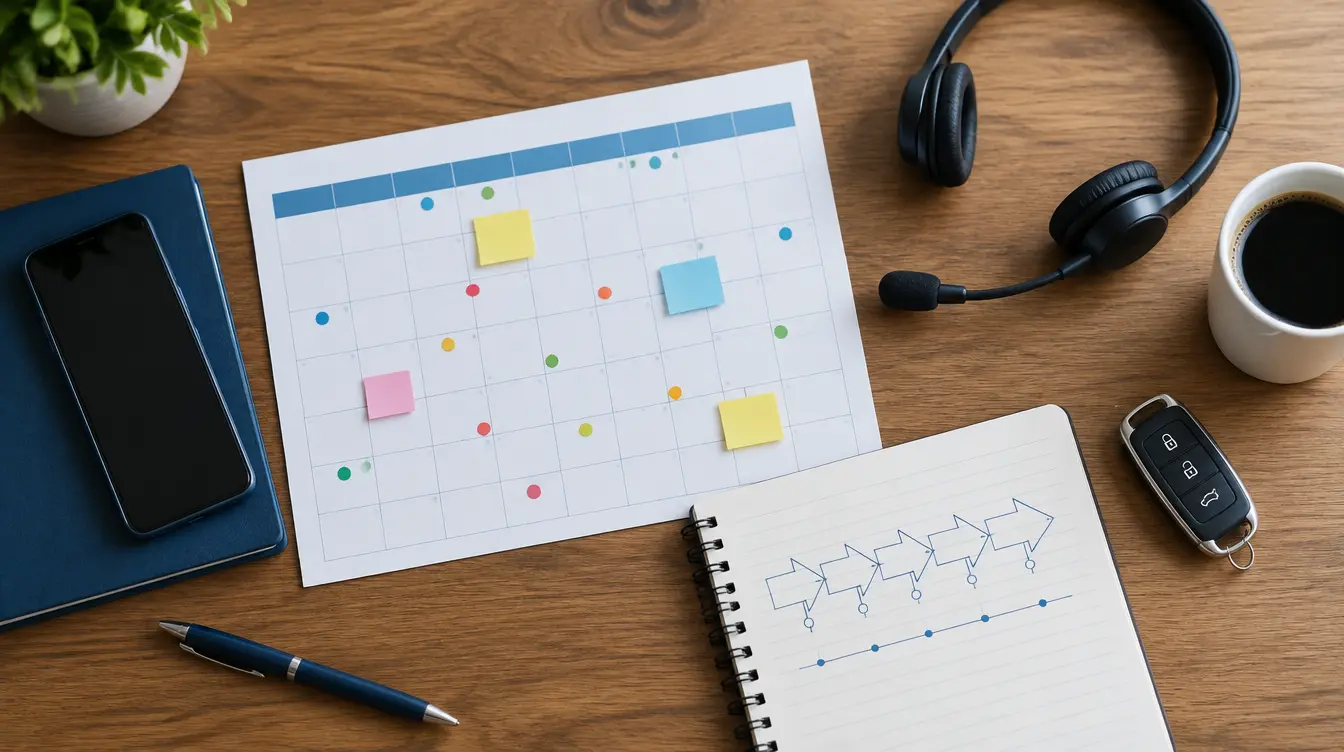
Most salespeople stop after two or three tries. Most shoppers aren’t ready after two or three tries. That gap is where a lot of sales disappear. Foureyes found that 62.8% of shoppers who came back to a dealer’s website got no follow-up from a salesperson within 24 hours, even though returning to the site is one of the clearest signs someone is still in the market.
Good follow-up isn’t about calling more. It’s about putting most of your effort into the first few days, then staying in touch for three months with something genuinely new each time. Here’s the shape of it:
Half of the 90-day follow-up happens in the first four days
21 touches for a web lead that hasn’t replied, phases not drawn to scale
Days 1 to 4
Win the window
10 touches
call, text, email, video
Days 5 to 15
Add new value
4 touches
alternatives, manager
Days 16 to 30
Ask and re-offer
3 touches
price news, closure
Days 31 to 90
Monthly value
4 touches
incentives, arrivals
Swipe to see the full diagram →
A reply, an appointment, a purchase elsewhere or a request to stop ends the schedule at once.
A strong follow-up sequence is not about contacting a shopper as many times as possible. It is about staying relevant without becoming repetitive.
For an internet or marketplace lead that has gone quiet, each touch should do one of three things: answer an open question, provide something useful, or make the next step easier.
The moment the shopper responds, stop the automated cadence and continue the conversation based on what they actually need.
The day-by-day schedule
| When | How | What to say |
|---|---|---|
| First 5 minutes | Text + email | Confirm the vehicle they asked about, answer their question, and offer one simple next step: a video, availability check, appointment, or additional information. |
| 15 minutes | Phone call | Make a brief, personal call. If they don’t answer, leave a short voicemail identifying yourself and referencing the vehicle they inquired about. |
| 2 hours | Text | Send something useful about the specific vehicle: a walk-around video, additional photos, features, history report, or answers to a question from their original inquiry. |
| End of Day 1 | Text | Make the next step easy: “I can send over the numbers, set up a quick visit, or answer any questions you have. What would be most helpful?” |
| Day 2 | Call + text | Follow up with new information, not just “checking in.” Mention a relevant alternative, updated availability, financing information, or something specific about the vehicle. |
| Day 3 | Give them useful buying information: estimated payment options, trade-in process, vehicle history, equipment comparison, or similar vehicles in stock. | |
| Day 4 | Call + text | Ask a low-pressure question that helps you understand where they are: “Are you still considering the RAV4, or have you moved in a different direction?” |
| Day 6 | Text | If appropriate, send one alternative that matches their original criteria—similar price, mileage, model, or features. Don’t send a generic inventory list. |
| Day 8 | A brief personal follow-up from the salesperson or manager, focused on making it easier to get an answer or resolve a concern—not simply introducing another person. | |
| Day 11 | Call | Try to uncover the actual obstacle: price, trade-in, financing, timing, vehicle availability, or simply that they are still shopping. |
| Day 15 | Text | Use a simple permission-based check-in: “Are you still shopping for an RAV4, or should I leave you alone for now?” |
| Day 22 | Share something genuinely relevant to their search: a price change, new comparable inventory, market update, financing opportunity, or a vehicle that better matches what they wanted. | |
| Day 30 | Call + text | Re-engage only with a specific reason: the vehicle they viewed changed price, a similar vehicle arrived, their requested model came back in stock, or there is a relevant incentive. |
| Day 45 | Text or email | A useful inventory or market update based on what they were shopping for. Keep it specific rather than sending a generic dealership promotion. |
| Day 60 | Text or email | Revisit their original need with new information: a new arrival, comparable vehicle, updated trade estimate, or relevant financing opportunity. |
| Day 75 | Text or email | Keep the message short and useful. If nothing has materially changed, don’t manufacture a reason to contact them. |
| Day 90 | Text or email | Make this the transition point: ask whether they are still shopping and, if so, what has changed in their requirements. |
| After Day 90 | Monthly email | Move the shopper into long-term nurture. Send relevant inventory, price changes, model updates, and dealership offers until they purchase, opt out, or tell you they’re no longer shopping. |
The principle behind the cadence
The cadence should become less frequent as time passes, but more relevant when you do reach out.
A shopper who has ignored six messages does not need a seventh version of “Just checking in.” They need a reason to respond.
Good reasons include:
- The vehicle they wanted changed price
- A similar vehicle arrived
- The requested vehicle came back into stock
- A trade value changed
- A relevant financing or incentive option became available
- You found a vehicle that better matches their budget or requirements
- You have information that answers a question they previously asked
If there is nothing new to offer, a short permission-based message is better than inventing urgency.
Messages you can actually use
Day 2 text — new information
Hi Jordan, Maria at Lakeside Toyota. I wanted to send you the RAV4’s history report and a few more photos since you were looking at it. I also found a similar one with 12k fewer miles if you’d like me to send that over too.
Day 4 voicemail — simple and personal
Hi Jordan, this is Maria at Lakeside Toyota, 555-0100. I’m following up on the RAV4 you asked about. I wanted to see if you had any questions I could help with. Give me a call or just text me back when you have a minute.
Day 8 email — helpful, not a management escalation
Hi Jordan, I wanted to follow up on the RAV4 you were looking at. If price, financing, or your trade is holding things up, I’m happy to work through any of those with you. If you’re still comparing vehicles, I can also send you a couple of similar options. Just let me know what would be most useful.
Day 15 text — permission-based
Hi Jordan, are you still shopping for an RAV4, or have you gone in a different direction? Either way is completely fine—I just don’t want to keep filling your phone with messages you don’t need.
Day 30 text — real reason to reconnect
Hi Jordan, Maria at Lakeside Toyota. The 2023 RAV4 you looked at is now $900 lower than when you first asked about it. It’s still available if you’d like me to send you the updated numbers.
What makes these follow-ups work
The best follow-up is not necessarily the one with the cleverest wording. It is the one that uses what you know about the shopper.
A shopper who asked about monthly payments should get payment information. Someone concerned about their trade should get a trade estimate. Someone comparing two vehicles should get a useful comparison. Someone who has simply gone quiet should get an easy way to tell you whether they are still shopping.
That is the difference between follow-up and follow-up spam.
The goal of a 90-day cadence is not to send 21 messages. The goal is to create 21 opportunities to be useful—while giving the shopper an easy way to respond, postpone, or opt out.
When to stop
- The shopper replies. Switch from the schedule to a real conversation.
- They book an appointment. Move them to your appointment reminders instead.
- They buy somewhere else. Ask politely what made the difference, then invite them to your service department.
- They ask you to stop, in any words, on any channel. “Not interested” by email counts the same as “STOP” by text. Stop everywhere, and note it in your CRM.
Also keep automated calls and texts to reasonable hours. Federal rules allow 8 a.m. to 9 p.m. in the shopper’s time zone, and some states, including Florida, Oklahoma and Maryland, are stricter. If you’re unsure, check with your dealer association or attorney.
Bringing old leads and past customers back
A lead that went quiet isn’t dead. Their timing changed. Reach back out when you have a real reason: the price dropped, a car that matches what they wanted just arrived, a new incentive started, or the new model year is here.
Your past customers are an even better source. People whose car is now worth more than they owe, whose lease is ending soon, or whose car is getting up in miles at service time are all strong candidates for a personal upgrade offer. Dealers often call this equity mining. It works best as a personal note from a salesperson or service advisor they already know, not a mass blast.
Your phones are probably losing more deals than your website
Dealers spend a lot of energy on web leads, but the phone is where the most serious shoppers are, and where many of them slip away. Car Wars analyzed about 44 million calls to dealerships in the first half of 2026 and found:
- only 56% of sales callers reached a person (the best stores reached 71%);
- fewer than half of missed calls got a call back;
- 64% of sales callers who couldn’t get through never called again;
- salespeople invited the caller to visit on only about half of sales calls.
That last one stings. Even when someone answered, they often didn’t ask the caller to come in.
The difference between a phone shopper and a web shopper shows up clearly in the numbers. Using Foureyes’ appointment data, here’s what happens to 100 leads of each kind:
Per 100 leads, phone-ups produce about 18 sales; web leads about 8
New-car leads: what happens to every 100 of each kind
| Internet leads | Phone-ups | |
|---|---|---|
| Leads | 100 | 100 |
| Appointments set | 32 | 73 |
| Appointments shown | 18 | 45 |
| Sold | 7.5 | 18 |
Rates: Foureyes appointment study, about 700 US dealers, H2 2023 data
Once a phone shopper books and shows up, they buy at about the same rate as a web shopper. The big difference is getting the appointment in the first place: a live conversation turns into a booked visit more than twice as often as a web form does. That’s why fixing the phones is often the fastest win a store can get.
What a good phone call sounds like
A good sales call takes about a minute to get right, and it follows the same six steps every time:
1. Greet them and introduce yourself. “Thanks for calling Lakeside Toyota, this is Maria in sales. Who am I speaking with?”
2. Get their number early. “In case we get cut off, what’s the best number to reach you?”
3. Answer what they asked. Confirm the car, the price or whatever they called about. Dodging the question is the fastest way to lose them.
4. Ask one helpful question. “Will you be trading anything in?”
5. Offer two specific times. “I can have it pulled up for you at 4:30 today or 10 tomorrow morning. Which works better?”
6. Confirm by text right after the call, with the car’s link and your address.
Call back missed calls before they call someone else
Every store misses calls. What matters is what happens next. Set things up so that every missed sales call gets a text within a couple of minutes (“Sorry we missed you, this is Maria in sales. What can I help with?”) and a call back within five. Send sales calls to people who can actually answer sales questions, not to a busy front desk. And once a week, have managers listen to three to five recorded calls per salesperson and coach on one thing at a time.
Getting shoppers to actually show up
Booking the appointment is only half the job. In Foureyes’ data, only about 56% of appointments from web leads actually showed up. Almost half of the people who said yes never walked in. Most of those aren’t lost; they just weren’t given a strong enough reason to keep the time.
What a solid appointment looks like
A “come by this week” isn’t an appointment. A real one has four parts:
- A specific time. “Thursday at 5:30”, not “Thursday afternoon”.
- A specific car, pulled up, cleaned and ready to drive.
- A named person who will meet them at the door.
- A shared plan for the visit: a test drive, a trade appraisal, going over numbers, or all three.
Reminders that cut no-shows
- The day before: a text confirming the time, the car, who’s meeting them and your address, with an easy way to reschedule.
- Two hours before: a short, friendly text from the person meeting them. A photo of the car parked out front works surprisingly well.
- If they don’t show: a no-pressure text within 15 minutes offering a new time. A no-show is usually a busy day, not a lost sale.
The hand-off on the lot: don’t make them repeat themselves
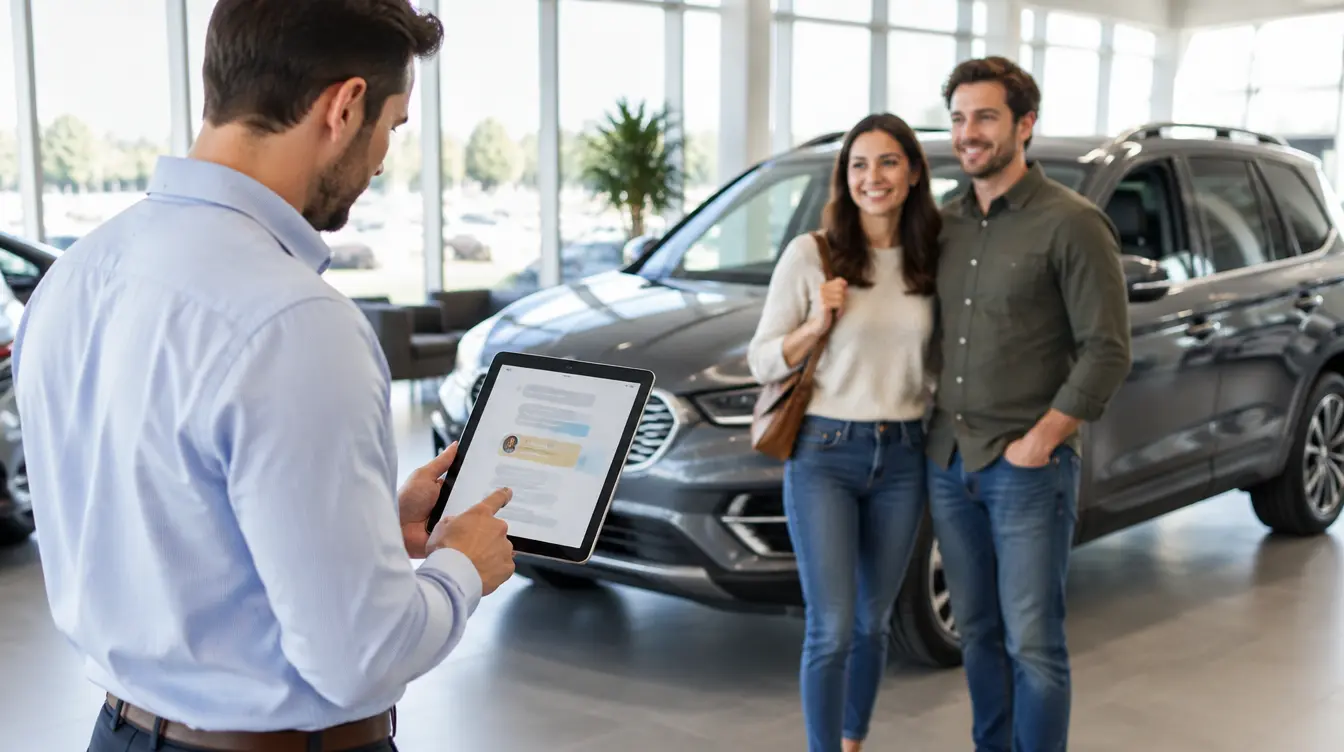
Nothing deflates a shopper faster than walking in and being asked the same questions they already answered by text. Before they arrive, whoever greets them should know their name, the car they want, what they’re trading, and anything they asked about price or payments. If the conversation started with a BDC agent or an AI assistant, the salesperson should get a short summary before the customer walks through the door.
Where AI helps, and where it can cost you a sale
AI is very good at the parts of this job that wear people out: answering at 11 p.m., sending all the follow-up texts on time without forgetting, sorting out which shoppers look ready to buy, and writing notes into the CRM. It’s not good at reading a frustrated customer, negotiating, or earning trust across a desk.
The tool usually isn’t the problem. The problem is unclear rules about what the AI does and when a person steps in.
When AI must pass the customer to a person
Write these rules down and agree on how fast a person will take over:
- They ask about price, payment, rate or trade value beyond what’s published: a sales manager replies within 15 minutes during business hours, or first thing next morning.
- They’re ready to buy (“can you hold it?”, “what should I bring?”): the AI offers two appointment times and the salesperson gets an alert within 5 minutes.
- They’re frustrated or complaining: the AI apologizes, stops messaging, and a manager reaches out within 15 minutes.
- They ask for a person: a person replies within 5 minutes during business hours.
- They ask about credit: the AI sends the secure application link and a finance manager follows up.
- They ask to stop: all marketing messages stop immediately, everywhere.
- The AI doesn’t know the answer: it says it will check, and passes the question on.
How to tell if your AI is working
Once a week, read 20 random AI conversations. For each, ask four questions: was it accurate, did it answer what was asked, did it hand off when it should have, and did a person pick it up in time? Then compare AI-handled leads with human-handled leads on the numbers that matter (appointments, shows and sales), not just on how fast they replied.
Who should own the lead: BDC, salespeople or AI?

There’s no single right setup. What matters is that every lead has exactly one person responsible for it at any moment, and everyone knows when it passes from AI to the BDC to the salesperson.
Four ways to set up your team
| Setup | How it works | Works best for | Watch out for |
|---|---|---|---|
| Salesperson owns it all | The salesperson handles the lead from first reply to delivery | Smaller stores with experienced salespeople | Leads go cold when salespeople are with customers or off for the day |
| Traditional BDC | A BDC team replies and books appointments; salespeople sell | High-volume stores | Appointments booked just to hit a quota; clumsy hand-offs |
| Mixed | The BDC or AI handles first replies and evenings; salespeople take over once the shopper is engaged | Most franchise stores | Confusion over who owns the lead after the hand-off |
| ✅ AI first, people for the important moments | AI replies and follows up; a smaller team handles phones, hand-offs and appointments | Stores with a disciplined process and a clean CRM | Too much automation; shoppers who can’t reach a person |
Rules that stop leads from going cold
- Every lead gets an owner within a minute. Rotate between available salespeople, or match by specialty, such as used cars, EVs or Spanish speakers.
- If nobody has personally reached out within 15 minutes during business hours, the lead moves to someone else or goes to a manager.
- A returning shopper goes back to the same salesperson, with an alert. Coming back is a strong buying signal.
- Days off reassign automatically. Leads shouldn’t pile up waiting for Monday.
Why leads disappear before anyone calls them
Some leads aren’t lost because someone handled them badly. They’re lost because nobody handled them at all. Foureyes found that 15.2% of qualified leads in 2026 never made it into the dealer’s CRM. You can’t follow up on a customer you don’t know you have.
These are the usual leaks:
- Phone calls and walk-ins that never get entered. Web leads arrive in the CRM on their own. Phone-ups and showroom visits depend on someone typing them in, and on a busy Saturday that’s the first thing to slip.
- Texts on salespeople’s personal phones. The conversation is real, but the store can’t see it, measure it or pick it up when that salesperson is off or leaves.
- Leads with no next step. If a lead doesn’t have a scheduled call or task, nobody will call it.
- Leads with no clear owner, or two owners who each think the other one has it.
- A second inquiry deleted as a “duplicate” instead of being treated as a buying signal.
- Lost leads with no reason recorded. “Bought elsewhere”, “not ready”, “bad phone number” and “price” each need a different fix. If you don’t write it down, you’ll never know which one is hurting you.
The fix is a simple house rule: if it isn’t in the CRM with an owner and a next step, it doesn’t exist. Managers check it daily, and missed calls automatically create a task.
How to choose the best lead management tools for your store
There’s no single best lead management tool for every dealership. The best one is the tool your team actually uses every day, that fits the size and type of your store, and that works with the systems you already have. A great CRM nobody updates is worth less than a simple one everybody lives in.
Most stores end up with three kinds of tools working together:
- A CRM, your home base, where every customer, conversation and next step lives.
- An AI assistant, for instant replies, handling calls, after-hours coverage and steady follow-up.
- A phone tool, to track, record and coach on calls and catch the ones you miss.
Some products now try to do all three. That can be simpler, as long as each part is genuinely good.
What to look for, whatever you buy
- It’s easy enough that salespeople will use it on their phones, between customers, without being chased.
- It works with your DMS, website and lead providers without double entry.
- Every text, call and email is saved to the customer’s record, including ones from salespeople’s phones.
- It answers from your live inventory, so nobody, human or AI, offers a car that sold yesterday.
- It shows you the numbers that matter: response time, appointments, shows and sales by source and by person.
- The AI hands off to a person cleanly, with a summary, and you control what it can and can’t say.
- It handles requests to stop messaging across every channel automatically.
- You can leave. Check the contract length and whether you can take your customer data with you.
Well-known dealership CRMs
Listed alphabetically. Nobody paid to be included, and the descriptions reflect what each company says about its own product as of October 2026. Always ask for a demo using your own leads.
| CRM | Owned by | Known for | Usually a fit for |
|---|---|---|---|
| AutoRaptor | AutoRaptor | Web-based CRM with an AI assistant that answers leads by text, email, chat or voice | Independent dealers |
| CDK CRM (formerly Elead) | CDK Global | Shared inbox for email, text and chat, desking, video messages and an AI virtual assistant | Franchise dealers, especially CDK stores |
| DealerCenter | Nowcom | Dealer management system with a built-in CRM, lead assignment and buy-here-pay-here tools | Independent and buy-here-pay-here dealers |
| DealerSocket | Solera | CRM with customer data mining and desking; added major AI features in 2026 | Franchise and independent dealers |
| DriveCentric | DriveCentric | CRM built around AI follow-up, with texting, email and video built in | Franchise and independent dealers |
| FOCUS CRM | Reynolds and Reynolds | One customer record shared by sales and service, with tools for BDC teams | Stores on the Reynolds system |
| Tekion | Tekion | CRM inside an all-in-one cloud platform that also runs the dealership’s core systems | Groups moving to a single platform |
| VinSolutions Connect CRM | Cox Automotive | Works closely with Autotrader, Kelley Blue Book, Dealer.com and Dealertrack; AI flags shoppers who look ready to buy | Franchise dealers using Cox products |
Well-known AI assistants for dealers
| Tool | Known for |
|---|---|
| Drivee AI | AI operating system for sales and service; covers text, email, messenger, inbound & outbound calls. |
| Fullpath | Customer data and marketing automation with AI follow-up; bought by Cox Automotive in June 2026 |
| Impel | AI for sales, service, chat, and phone. |
| Matador AI | AI that replies to leads, follows up, chats and answers calls for sales and service |
| Numa | AI built mainly for the service department: phone answering, a shared inbox and customer satisfaction monitoring |
| Podium | An AI assistant for leads, calls and appointments, plus a shared inbox for customer messages |
Well-known phone tools for dealers
| Tool | Known for |
|---|---|
| Car Wars | Call tracking, missed-opportunity alerts, an AI receptionist and call scorecards |
| CallRevu | Call tracking and coaching, a hosted phone system, and fast-response tools from its 2026 purchase of Calldrip |
Questions to ask before you sign
1. Can you show me a real conversation where your AI handed a customer to a salesperson? How fast did the person pick up?
2. What does your AI do when it doesn’t know the answer, or when a customer asks for a price?
3. Will texts sent from my salespeople’s phones show up in the customer’s record?
4. How do you report results: by lead source, by salesperson, and AI versus people?
5. Which of my current systems do you connect with, and who fixes it when the connection breaks?
6. How long is the contract, and how do I get my data out if I leave?
7. Can I talk to two dealers my size who’ve used you for over a year?
The numbers to watch every week
You don’t need a 40-page report. A handful of numbers, checked every week, will tell you whether leads are being handled well and exactly where they’re slipping.
| Number | What it tells you | How to work it out | What’s typical |
|---|---|---|---|
| Response time | How long shoppers wait for a first reply | Time from inquiry to first reply, at all hours | Aim for under 5 minutes |
| Time to a real person | How long until a human gets involved | Time from inquiry to the first reply from a person | Aim for under 15 minutes in business hours |
| Contact rate | How many leads you actually talk with | Leads with a two-way conversation, out of all leads | About 69%, according to Foureyes’ 2026 data |
| Appointment rate | How well you turn conversations into visits | Appointments booked, out of all leads | Web leads 32–41%; phone calls 73–81% |
| Show rate | How many booked appointments walk in | Appointments that showed, out of appointments booked | Web leads 50–56%; phone calls 62–63% |
| Closing rate on visits | How well your floor sells | Cars sold, out of appointments that showed | About 40–42% |
| Missed sales calls | How many phone shoppers reach nobody | Sales calls not answered by a person, out of all sales calls | 44% across the industry; best stores 29% |
| Leads not in the CRM | How much you can’t see | Leads you know about that aren’t in the CRM | Should be zero; Foureyes found 15% in 2026 |
The benchmarks above come from Foureyes, Car Wars and their published studies. Use them as a starting point, then focus on beating your own last quarter.
One tip on response time: look at the typical (middle) response, not the average. One lead answered three days late will drag the average up and hide how most shoppers are treated. And report evening and weekend leads separately, because that’s usually where the biggest gaps hide.
Your 2026 lead management checklist
Print this out, or share it at your next sales meeting. Every item is something you can check this month.