
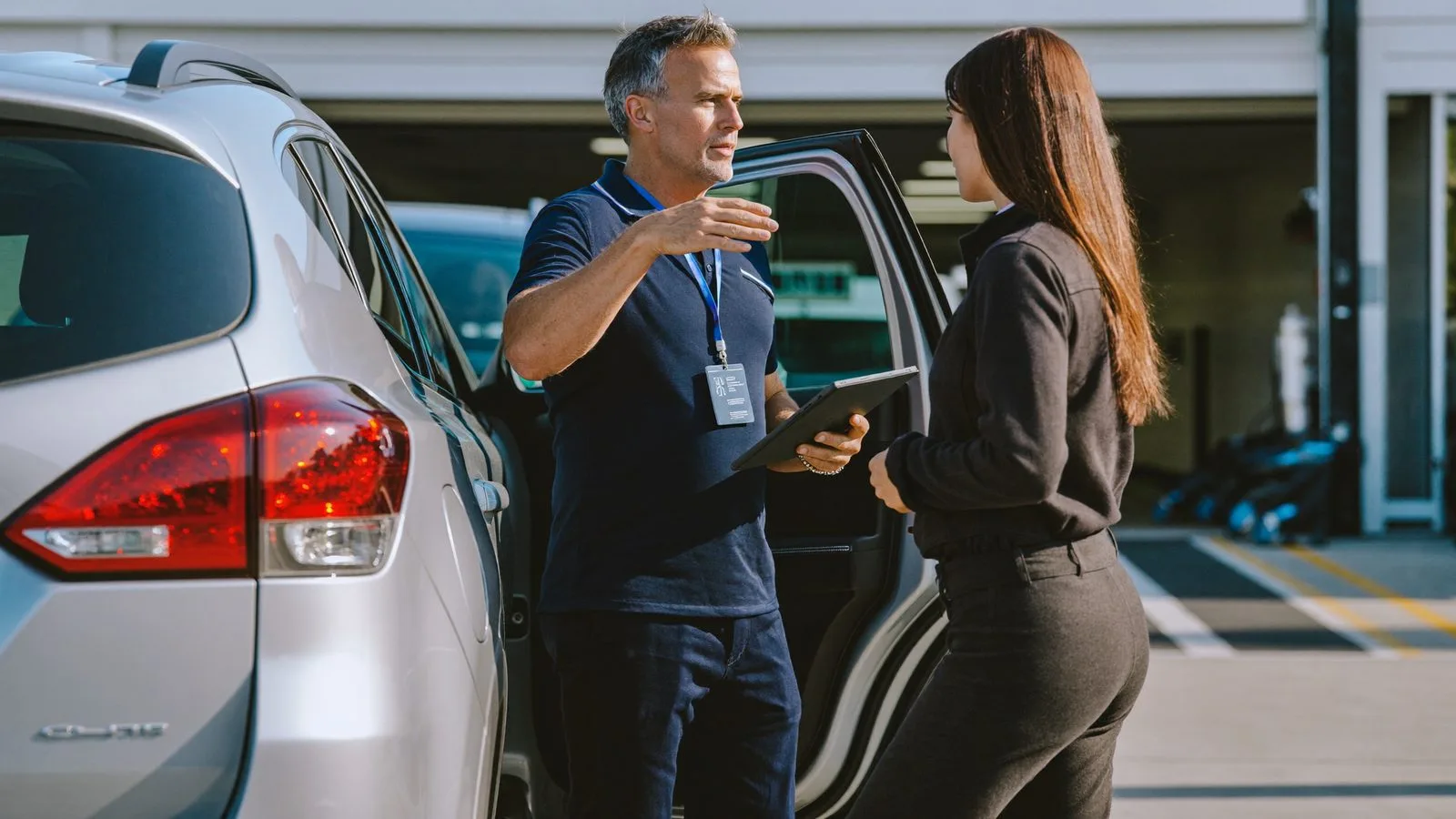
Dealers use AI to buy used cars directly from two groups: service customers already in their shop, and private sellers in their market. The AI finds the cars the dealer wants and flags the owners most likely to sell, such as someone facing a large repair bill. It then texts or calls them within minutes with an estimated price. A dealership buyer inspects the car and makes the final offer. Done with the seller’s consent, this usually costs less per car than buying at auction.
Why dealers are sourcing more used cars directly in 2026
Supply is still below normal. Cox Automotive counted 2.21 million used vehicles on franchised and independent lots in September 2026. That is 49 days of supply, still below the roughly 2.42 million units of September 2022, and the average listing price was $27,235 (Cox Automotive, Oct. 2026). In Cox’s Q2 2026 dealer sentiment survey, independent dealers scored 40 and franchised dealers 53, and Cox noted that independents are still struggling to source inventory.
Auction cars come from farther away. Cox reports that dealers buying online through Manheim.com and OVE source vehicles from more than 400 miles away on average (Cox Automotive, Oct. 20, 2026). Every one of those miles adds transport cost and days before the car is frontline-ready.
Off-lease volume hasn’t recovered. Leasing was almost 30% of new vehicle purchases before 2021 and is now in the low-to-mid 20% range, so fewer clean three-year-old cars come back each year (Cox Automotive Mid-Year Review, June 2026).
Meanwhile, your own customers are sitting in the service lounge with the cars you need. Cox Automotive’s service research found a 19-point gap between customers who are highly interested in a trade-in number during service (33%) and those who were actually offered one (14%). Cox also found that 86% of high-performing dealers have an established service-lane acquisition process, compared with 72% of other dealers.
Consumers start considering a trade-in over repair at $3,195 in repair costs.
What AI does in vehicle acquisition, and what stays human
“AI-powered acquisition” can mean anything from a lead list to a voice agent that calls sellers. These are the jobs worth handing to software, and the ones to keep with people.
| Job | What AI does well | What stays human |
|---|---|---|
| Find | Pull upcoming service appointments, past customers and new private listings into one queue every day. | Deciding which models you actually want this month. |
| Score | Rank each vehicle by seller signals and by how well it fits your inventory needs (see the signal map below). | Changing the wishlist when the market moves. |
| Reach | Send the first text or call within minutes, in the dealership’s name, at any hour the law allows. | Approving the scripts and the consent rules. |
| Qualify | Ask about mileage, condition, keys, accidents, liens and timing. Request photos of the odometer, VIN and damage. | Reading photos for things a seller didn’t mention. |
| Price range | Give a preliminary range based on market data, clearly labeled as subject to inspection. | The final, firm offer. |
| Schedule | Book the appraisal, send reminders, reschedule no-shows. | The inspection itself. |
| Follow up | Keep sellers who said “not yet” warm for weeks without anyone forgetting. | Title, payoff, ID checks and payment. |
The pattern is simple. AI handles volume and speed. Your buyer handles judgment and money. Dealers who let a bot quote firm prices sight unseen tend to overpay or lose the seller’s trust at the inspection.
Buying cars from your service drive with AI
Spot the customers most likely to sell
Asking every service customer “want to sell your car?” wastes time and annoys people. Ask the ones whose situation gives them a reason to say yes. Each row below is a signal you can already pull from the DMS, CRM or repair order. AI combines them into one score per appointment so your team sees a short list each morning.
| Signal | Where it lives | Why it predicts a sale | Suggested action |
|---|---|---|---|
| Repair estimate at or above ~$3,195 | Multipoint inspection, RO | Cox found this is the repair cost where owners start considering a trade over a repair. | Show the repair quote next to an offer for the car as-is. |
| Declined services on the last visit | RO history | The customer is already avoiding spending money on this car. | Mention the declined work in the appraisal and deduct it fairly. |
| Past powertrain warranty | VIN, in-service date, mileage | Future repairs now come out of the owner’s pocket. | Offer before the next big repair, not after. |
| Positive equity | Payoff estimate vs. market value | The owner can sell with cash left over, or upgrade at a similar payment. | Hand off to sales with a full deal structure. |
| Negative equity | Same | Edmunds found 30.9% of Q1 2026 trade-ins were underwater, by $7,183 on average. These owners usually can’t sell easily. | Lower priority. Don’t push a deal that hurts the customer. |
| Vehicle age 6+ years | VIN, in-service date | In Cox’s 2026 study, service cost per mile rises from $0.20 in years 0–5 to $0.47 in years 6–10, and about 80% of 10-year service cost comes after year five. | Combine with a repair estimate. Age alone is a weak signal. |
| On your wanted list | Your inventory tool, local days of supply | The car is worth more to you than to an auction buyer. | Make a stronger offer, and make it faster. |
No single signal is enough. A 9-year-old SUV with a $3,800 timing-belt-and-brakes estimate, past warranty, with equity, and on your wanted list belongs at the top of tomorrow’s list. A two-year-old car in for an oil change does not.
Ask at check-in, with consent built in
The cleanest moment to start is when the customer checks in. You have a business relationship, they’re thinking about their car, and you can ask for permission to send an offer in the same message.
Check-in text (example)
Hi Dana, this is Lakeside Honda service. Your Pilot is checked in. While it’s here, would you like a free cash offer on it from our used car team? No obligation. Reply YES for an offer or STOP to opt out of these messages.
A real-world example shows how this works. Mohawk Honda in Schenectady, N.Y., sends an automated text at check-in asking whether the customer wants an appraisal. If nobody on the team reaches the customer in person first, the system replies within two minutes with an appraisal range built from MMR and Kelley Blue Book. The store bought 75 cars from its service drive in March 2026, up from 25–30 a month (Car Dealership Guy, Apr. 2, 2026).
Build the offer from the inspection
Your technicians already inspected the car. Use that data. The offer the customer sees should make the logic visible: what the car is worth retail, what it needs, and what’s left.
Max offer = expected retail price − reconditioning (include the repair you just quoted) − target front gross − holding cost (days to sale × daily cost) − transfer, title and fees
A worked example: a car you expect to retail for $24,500, with $1,400 of recon, a $2,500 gross target, 30 days to sale at $37 a day ($1,110), and $200 in fees, gives a maximum offer of $19,290. The $37 daily holding cost is the average NCM Associates reported from its 20 Group studies. Replace it with your own number.
Showing the repair estimate next to the offer is the strongest part of the conversation. “Your car needs $3,800 of work. As it sits today, we’ll pay $19,000” is a decision the customer can make in the waiting room.
Get service advisors on board with the right pay plan
Service advisors are paid to write repair orders, not to buy cars. If buying a customer’s car means losing the RO, advisors will quietly stop flagging cars. Mohawk Honda’s process stalled until the store paid advisors on the internal work for vehicles it acquired.
Change up the people, the process, and the pay plans.
Mohawk uses two dedicated “exchange consultants” for these conversations. Johnson said that out of a hundred customers, they might get one who asks to be left alone. AI makes this role cheaper to run: the consultant spends time with the customers who replied YES, not chasing everyone.
How many cars your service drive can produce
You can estimate the volume your service drive can produce with three numbers you already have:
Cars per month = monthly ROs × % who request an appraisal × % you buy
Mohawk targets 15% of its roughly 3,000 monthly customer-pay and warranty ROs requesting an appraisal, and 20% of those converting. That’s a ceiling of about 90 cars a month. The calculator further down runs this math with your own numbers.
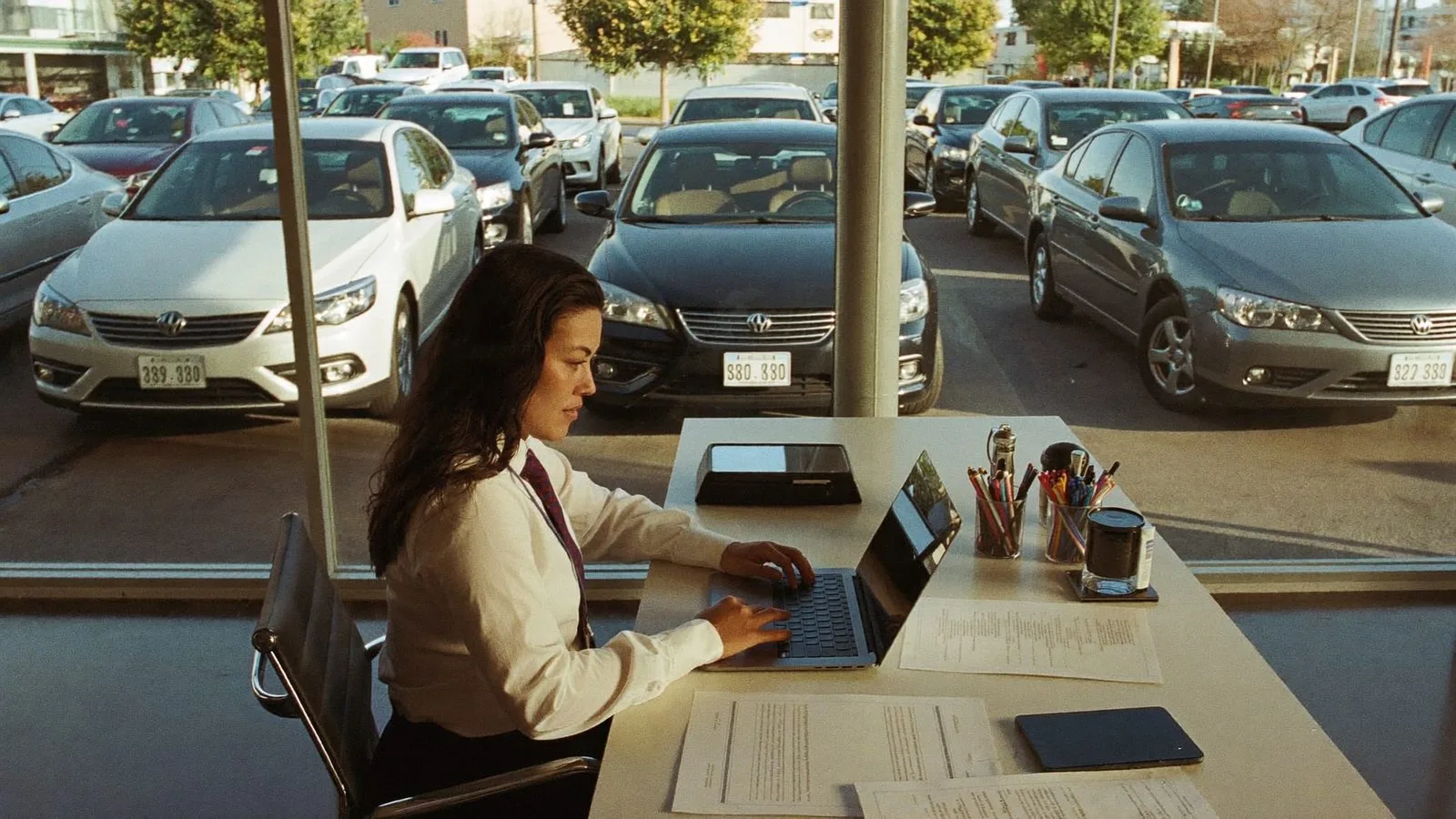
Buying cars from private sellers with AI
Where private sellers come from
- Marketplace listings. Facebook Marketplace, Craigslist, OfferUp and private-party listings on classifieds sites. Highest volume, highest competition, most fraud risk.
- Inbound “sell my car” requests. Instant-offer forms on your website and offer tools from third parties. The seller came to you, which also makes consent easier.
- Your own database. Past buyers and service customers who stopped coming in. Cox found dealers’ share of service visits fell from 33% in 2018 to 29% in 2025. Many of those customers still own cars you sold them.
Filter listings before you reach out
Most listings aren’t worth a message. Let AI remove the noise first:
- Duplicates. The same car posted on three sites.
- Dealers and curbstoners. The same phone number across many listings, stock photos, or “private seller” ads with a dealer’s background.
- Branded titles (salvage, rebuilt, flood) if you don’t retail them.
- Price outside your range. Asking prices far above market rarely close. A small gap is fine. Sellers often price high expecting to negotiate.
- Wrong cars. Anything not on your wanted list for this month.
Win on speed and simplicity, not just price
A private seller’s alternative to you isn’t another dealer. It’s strangers, test drives, no-shows and payment scams. Your offer is a simpler, safer sale. Lead with that, and reply fast. Speed matters as much here as with sales leads. Our dealership lead management guide covers why the first responder usually wins.
First message to a listing (example)
Hi, I’m Marcus, the used car buyer at Lakeside Honda. I saw your 2019 RAV4 XLE. We buy cars directly and pay the same day, including paying off your loan if there is one. Based on your listing it could be in the $19,500–$21,000 range, pending a 15-minute inspection. Want me to send a firm number if you share a few photos?
Reply to “I’ll get more selling it myself”
You might, and that’s a fair choice. What we can offer is a sale without strangers at your house, test drives, or worrying about a fake payment. We handle the paperwork and any loan payoff. If you’d like, I can send our number now and you can compare it with what you get this week.
Notice what these scripts do. They say who’s writing, give a range instead of a lowball, and make the next step small. In most states, a seller who also buys a car from you can trade in instead and pay sales tax only on the difference. That’s worth mentioning when it applies, but check your state’s rules first.
How to contact private sellers without adding BDC staff
Buy centers that work at volume often hire for people skills, not car knowledge. Car Dealership Guy reported on a buy center, advised by dealer David Long, that bought 106 cars in a month from private sellers, producing $650,000 in gross with no marketing spend. The team recruits “high-energy baristas” and trains them for two weeks (Car Dealership Guy, June 3, 2025). AI doesn’t replace that team. It gives them a ranked list and handles the first touch and the follow-ups, so they spend their day on sellers who are ready to talk.
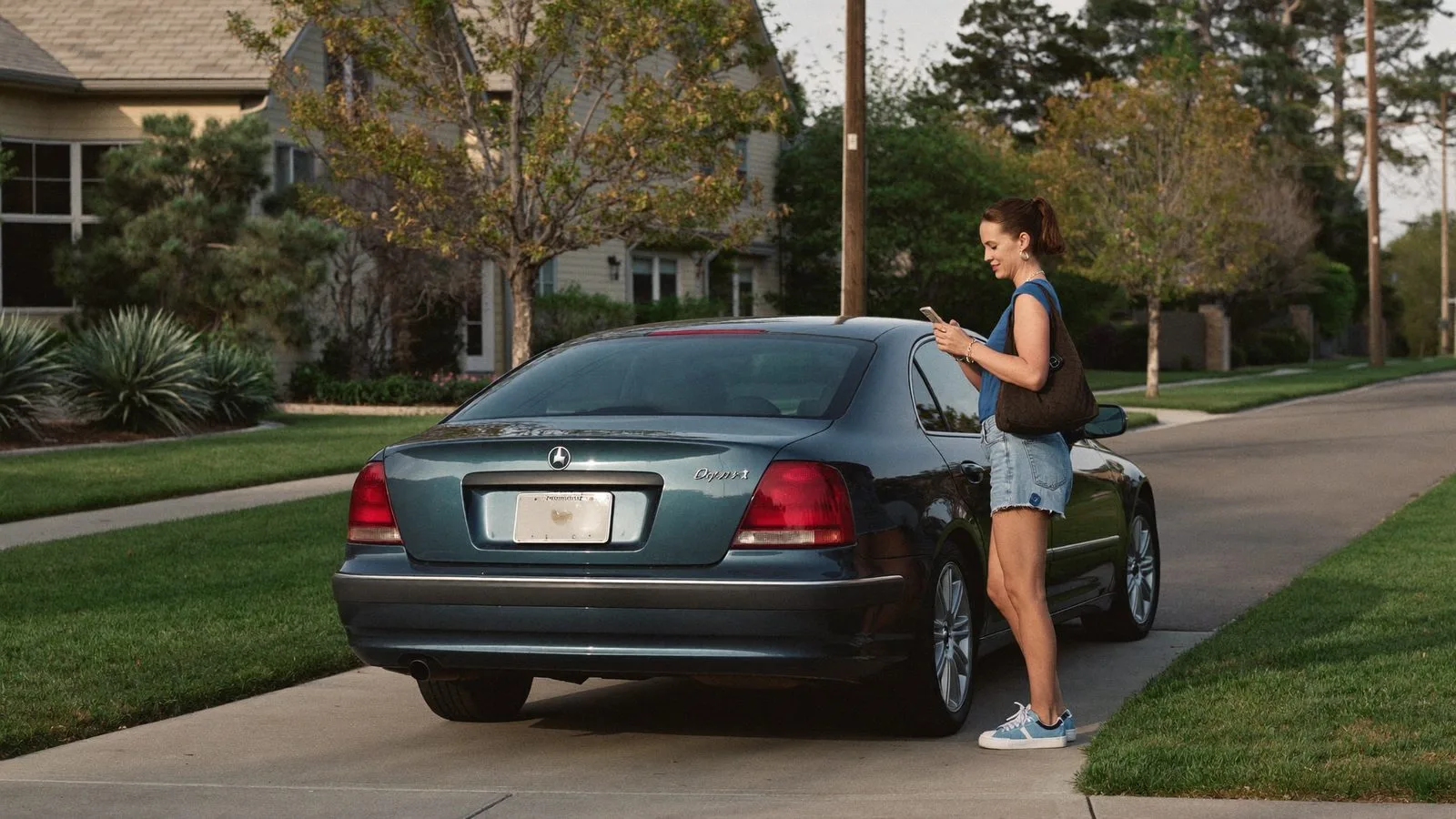
Compliance and fraud: what most guides leave out
This section is general information, not legal advice.
AI voice calls, texts and consent
- AI voices count as “artificial” under the TCPA. In a February 2024 declaratory ruling (FCC 24-17), the FCC confirmed that AI-generated and cloned voices fall under the TCPA’s rules for artificial or prerecorded voice calls. AI voice calls aren’t banned. They need consent.
- Identify yourself. Artificial-voice calls must state the business making the call and its phone number. Marketing calls need an automated way to opt out.
- Texts count too. The FCC treats text messages as calls under the TCPA, so automated texts follow the same consent logic.
- Honor opt-outs fast. Since April 2025, consumers can revoke consent “by any reasonable means,” and you have up to 10 business days to honor it. Plaintiffs have sued over messages sent one to three days after an opt-out, so make it immediate. The broader “revoke-all” provision has been delayed to January 31, 2027.
- The one-to-one consent rule is gone. The 11th Circuit vacated it in January 2025, and the earlier written-consent standard still applies.
- States can be stricter. Federal calling hours are 8 a.m. to 9 p.m. local time. Florida’s Telephone Solicitation Act limits commercial solicitation calls to 8 a.m.–8 p.m. and to three calls per 24 hours on the same subject. Other states, including Oklahoma and Maryland, have their own versions.
What this means in practice: the check-in YES described above is your friend. An inbound “send me an offer” form with clear consent language is your friend. Cold AI voice calls to numbers scraped from listings are not.
If you use an AI voice agent, make sure it discloses that it’s calling for your dealership, can transfer to a person, records consent and opt-outs to the CRM, and respects quiet hours by the recipient’s time zone.
Title, odometer and identity checks
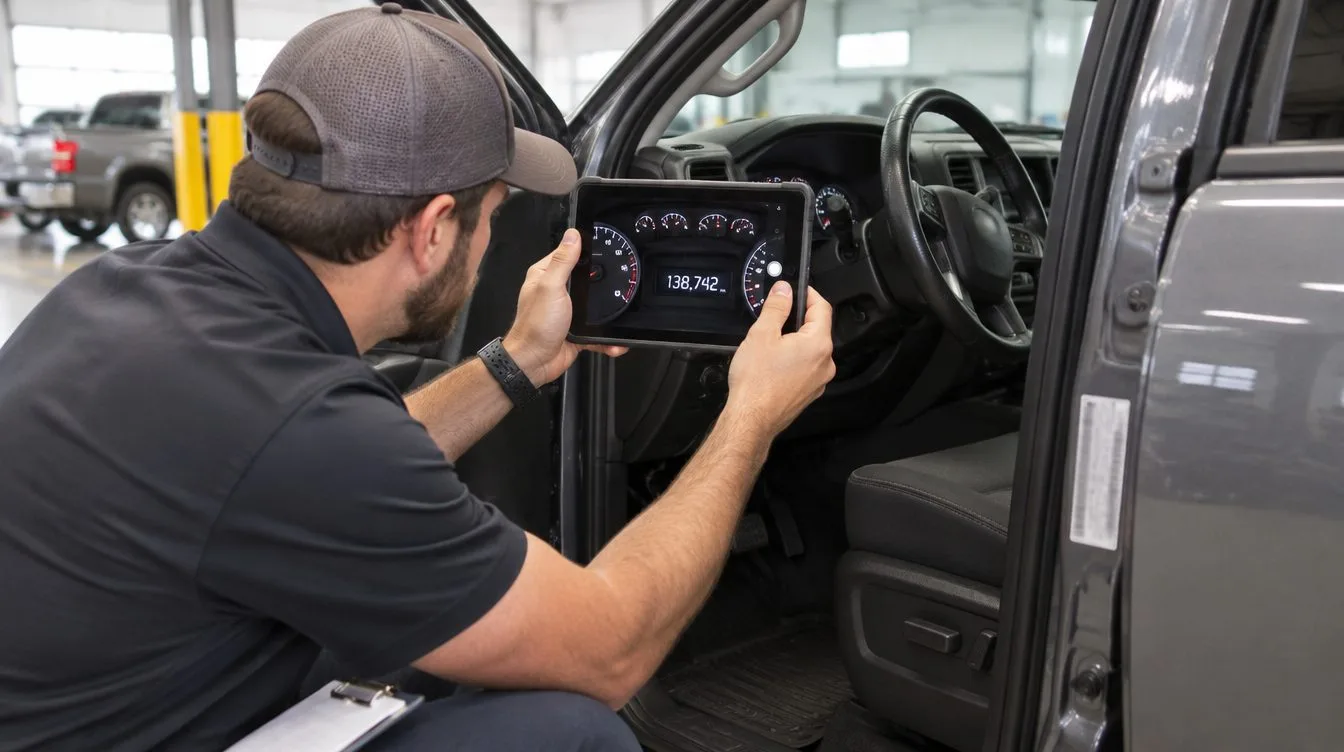
- Odometer fraud is still common. NHTSA estimates more than 450,000 vehicles a year are sold with false odometer readings, costing buyers more than $1 billion annually. Since January 1, 2021, model year 2011 and newer vehicles need an odometer disclosure on every transfer for 20 years.
- Compare three mileage sources: the dashboard photo, the vehicle history report, and your service records if the car is yours.
- Check for liens and theft. Get a payoff letter from the lender, never just the seller’s word. Run the VIN through NICB’s free VINCheck.
- Match the ID to the title. The person selling should be the owner on the title, or have documented authority to sell.
- Pay safely. Pay by check or electronic transfer to the titled owner (and the lienholder for the payoff), never cash to a third party.
Calculator: direct sourcing vs. auction cost per car
Purchase price is the wrong way to compare channels. A car bought $500 under MMR from a private seller can still cost more than an auction car if it sits in recon for three weeks. This calculator estimates landed cost per car (price relative to MMR plus fees, transport, recon, holding cost and acquisition cost) for auction and direct buys, then shows how many cars your service drive and private-seller outreach can produce.
Direct sourcing vs. auction
Start from the example values and change any number to match your store. A direct car is one you buy from a service customer or a private seller.
Volume
Auction car
Direct car
Advantage per direct car: $1,335. Yearly advantage: $640,800 at 40 direct cars a month.
Advantage per direct car
$1,335
auction landed cost minus direct landed cost
- Auction car, landed cost
- MMR + $2,520
- Direct car, landed cost
- MMR + $1,185
Yearly advantage
$640,800
advantage per car × direct cars × 12 months
- Direct cars per month
- 40
- Monthly advantage
- $53,400
The starting values are examples, not benchmarks. Replace them with your own numbers. The $37/day holding cost is NCM Associates’ 20 Group average as reported by Rapid Recon. “Acquisition cost per car” should include staff time, software and any marketing divided by cars bought. The comparison assumes a like-for-like vehicle, so the gross you make at retail cancels out.
The KPIs that tell you it’s working
| Metric | How to calculate it | Why it matters |
|---|---|---|
| Appraisal request rate | Appraisal requests ÷ ROs | Shows whether the check-in ask and the targeting work. |
| First-response time | Minutes from listing or request to first reply | Slow replies lose private sellers to faster buyers. |
| Look-to-book | Cars bought ÷ appraisals | Shows whether offers are realistic. |
| Paid vs. MMR | Average purchase price minus MMR, by channel | Shows whether you’re buying well or just buying. |
| Days to frontline | Days from purchase to retail-ready, by channel | Each day costs holding cost. Direct cars should be faster. |
| Landed cost per car | Price + fees + transport + recon + holding + acquisition cost | The one number that compares channels fairly. |
| Front gross by channel | Retail gross, grouped by acquisition source | Shows which source feeds your best deals. |
| Opt-out rate | Opt-outs ÷ people contacted | A rising rate means the targeting or the message is off, and it’s an early compliance warning. |
A 30-day rollout plan
Week 1: Set the rules. Write a wanted list from your turn and gross history. Agree on the offer formula and who approves final numbers. Have counsel approve consent language for check-in texts and inbound forms. Change the advisor pay plan so a purchased car never costs an advisor money.
Week 2: Turn on the service drive. Connect scheduling and DMS data, score tomorrow’s appointments each evening, and start the check-in ask. Name one person responsible for every YES within 15 minutes.
Week 3: Add private sellers. Start with inbound offer requests, since consent is clearest there. Add marketplace listings with a person approving first messages. Track first-response time daily.
Week 4: Measure and adjust. Compare landed cost per car and days to frontline against your auction buys from the same month. Drop signals that don’t predict sales, raise offers on wanted-list cars, and fix whichever step has the biggest drop-off.
What to look for in an AI acquisition tool or voice agent
Ask vendors these questions in the demo, and ask them to show you rather than tell you:
- Does it read our DMS and scheduling data, and write notes and outcomes back to our CRM?
- How does it capture, store and prove consent? How fast does an opt-out stop every channel?
- Does the AI voice agent identify the dealership, offer a transfer to a person, and follow quiet hours by the recipient’s time zone?
- Where do the price ranges come from, and can we set our own offer rules and limits?
- Can it collect odometer, VIN and damage photos before the appraisal?
- Can we see landed cost, look-to-book and days to frontline by channel and by rooftop?
- What happens when a seller asks for a person, and how fast does that person get the conversation?
Drivee is built around these questions. Our AI voice agent and AI sales agent handle first contact, qualification, photos and scheduling for service-drive customers and private sellers, then hand the conversation to your buyer with full context.